
Last updated August 27, 2026
Free in-home measure and quote - PGT, CGI and CWS impact lines compared on your actual openings, style by style





 Before
 After
After Before
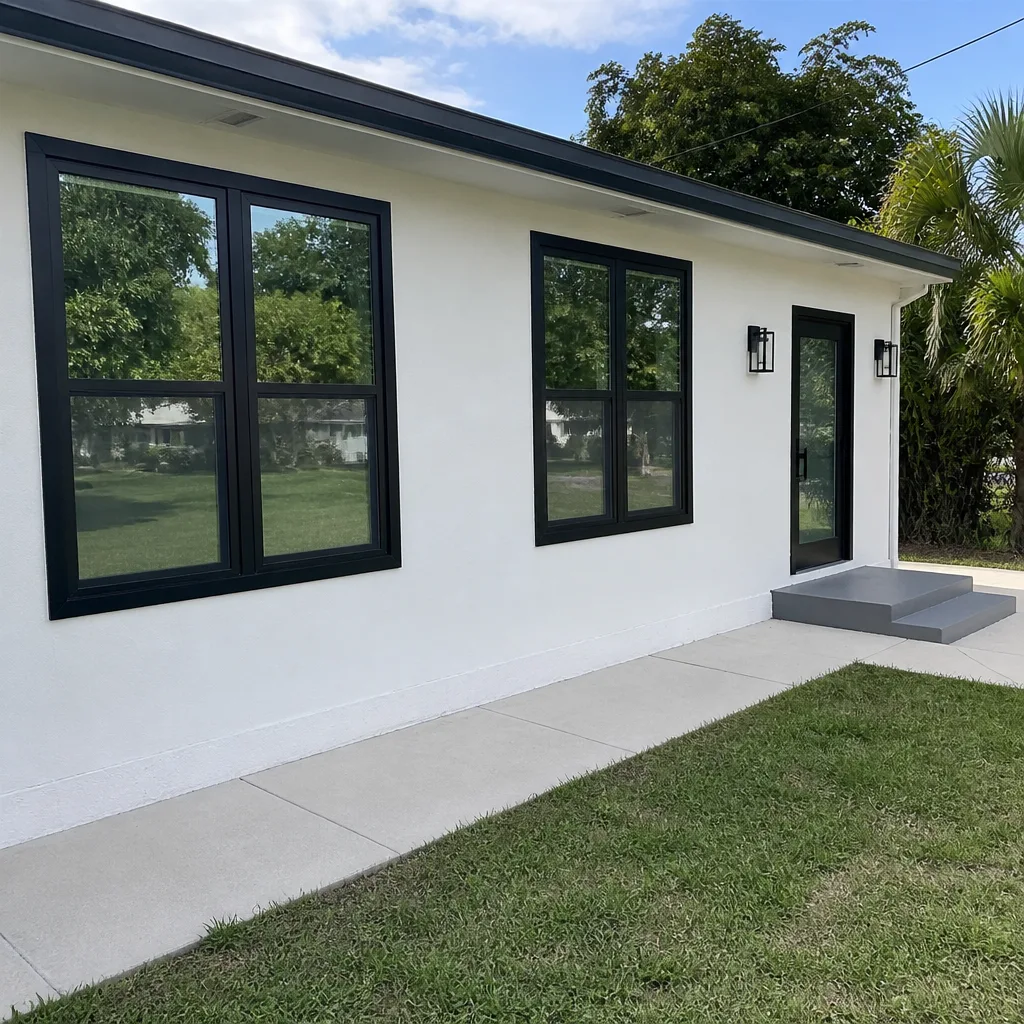 After
After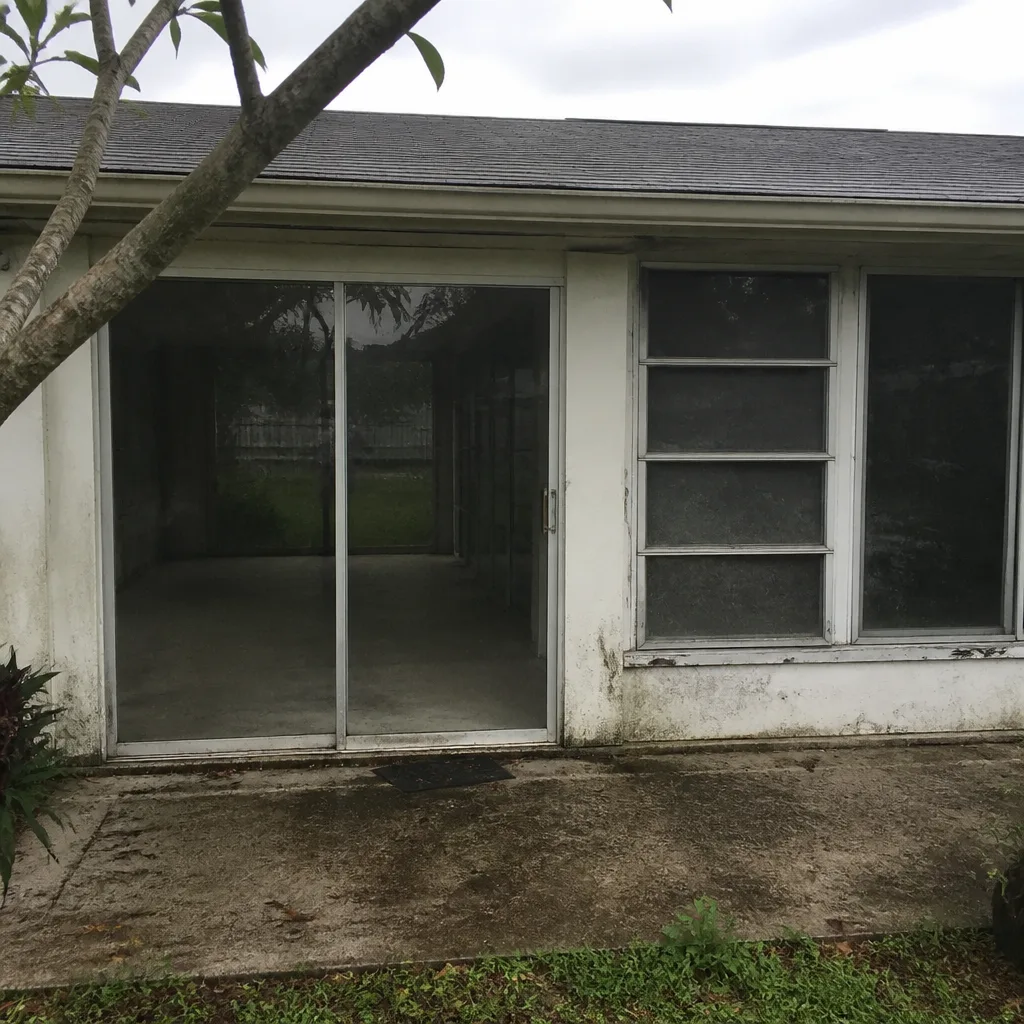 Before
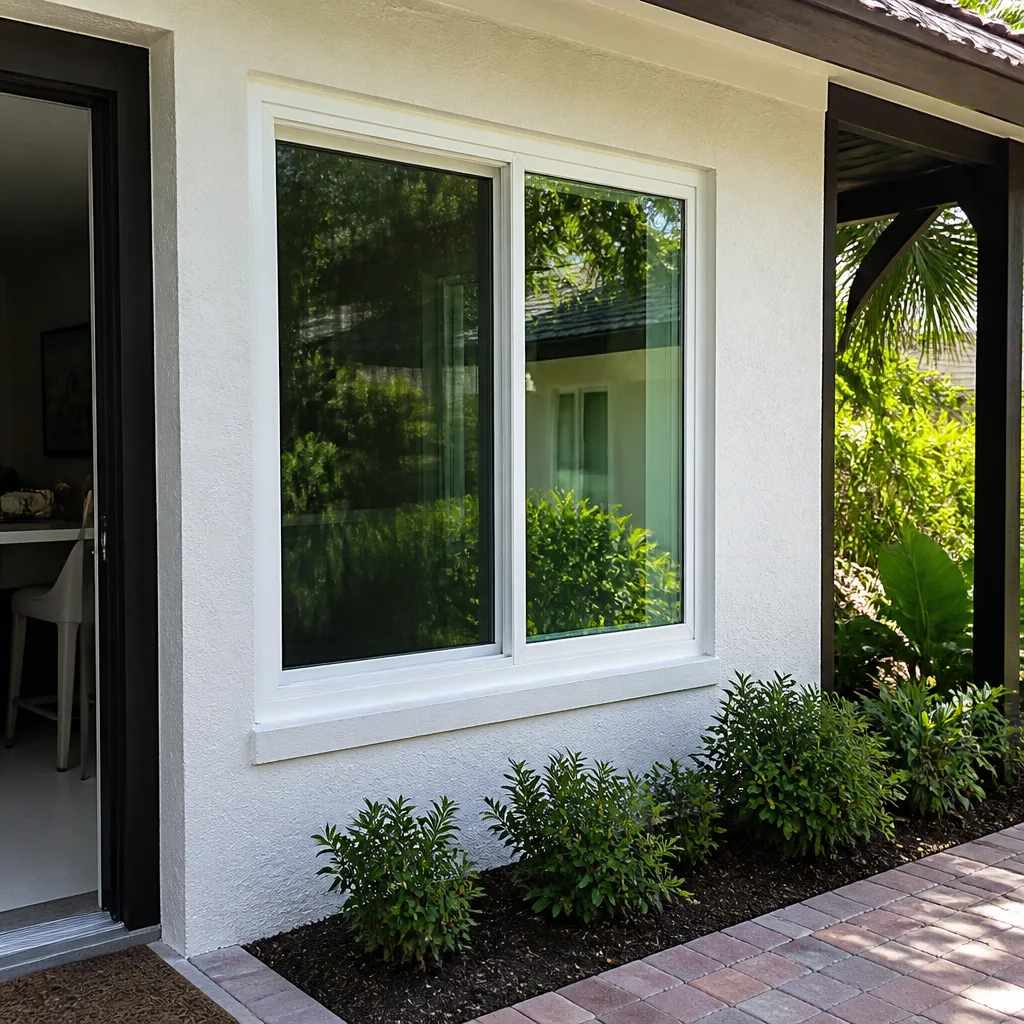 After
AfterImpact Windows Maintenance Checklist for Westchester Homeowners
Saltwater air in South Florida degrades impact window hardware up to three times faster than inland installations, yet most manufacturer care guides read like they were written for Ohio. Westchester sits close enough to the coast that the marine layer deposits a fine, salty film on frames, tracks, and gaskets roughly nine months out of the year. Left unaddressed, that film corrodes rollers, stiffens weatherstripping, and gradually eats through the protective finishes that keep your PGT or CGI units sealing tight. This guide lays out the year-round maintenance habits that preserve the engineering in your windows (and the warranty behind them) so a storm is never the first test your windows face.
Quick Answer
Impact window maintenance in Westchester comes down to five seasonal habits: rinse frames and tracks with fresh water quarterly, clean glass with a vinegar-water solution (never ammonia or abrasive pads), lubricate rollers and locking hardware with a dry silicone spray twice a year, clear weep holes and drainage channels before each rainy season, and photograph every unit annually for warranty documentation. Most of this takes under an hour per window over the course of a year, but skipping it is what turns a 20-year impact window into a 7-year failure.
Table of Contents
- Why Saltwater Changes Everything
- Cleaning Agents That Damage Low-E Coatings and Laminated Glass
- Weep Holes and Drainage: The Pre-Rainy-Season Inspection
- Hardware Lubrication Schedule for Westchester Humidity
- Two Visual Signs of Seal Failure You Can Spot Before Fogging Starts
- Warranty Documentation: What to Photograph and Log Every Year
- Frame and Gasket Inspection: The 15-Minute Perimeter Walk
- Impact Screen and Exterior Caulking Maintenance
- Common Mistakes to Avoid
- When to Call a Professional
- Frequently Asked Questions
- The Bottom Line
Why Saltwater Changes Everything
Westchester sits roughly ten miles inland from Biscayne Bay, which is close enough for prevailing easterly winds to carry a measurable salt load in the air, especially from March through October. That salt settles invisibly on everything outside (and on anything near an open window). For impact windows, the consequences show up first in three specific places: aluminum frame corners, stainless steel rollers, and the spring balances that make sashes feel light.
Manufacturers like PGT and CGI build impact windows with marine-grade finishes and corrosion-resistant hardware, but those protections are a first line of defense, not an indefinite shield. Salt is hygroscopic, meaning it pulls moisture from humid air and holds it against metal surfaces. In Westchester’s 70 percent average humidity, that creates a microclimate of constant dampness right where the finish was scratched during installation or routine use. Hairline scratches in frame powder coating become corrosion starting points. Chrome-plated rollers develop pitting that causes grinding and sticking. Spring balances lose their smooth travel, and the sash starts binding.
We have replaced windows in Westchester homes that were less than eight years old because the hardware seized from salt buildup while the glass itself was still perfectly intact. The windows did not fail because of a storm. They failed because eight years of airborne salt was never rinsed away. The maintenance checklist below is built around interrupting that cycle before it becomes expensive.
- Quarterly fresh-water rinse: Use a garden hose on a gentle setting to wash down the exterior frame, tracks, and sills. This dissolves and carries away salt residue before it can accumulate.
- Interior wipe-down monthly: A damp microfiber cloth along the bottom track and into the side channels removes salt that gets tracked in on hands and air currents.
- Hardware inspection every six months: Look for white, chalky deposits around screws, hinges, and roller adjusting bolts. That is salt corrosion starting. A soft-bristle toothbrush and fresh water remove it at this stage.
The entire rinse routine takes about 10 minutes per window if you are systematic about it, and it is the single highest-leverage habit a Westchester homeowner can adopt. Nothing else in this guide matters as much as keeping salt from settling in.
Cleaning Agents That Damage Low-E Coatings and Laminated Glass
The wrong glass cleaner will destroy a Low-E coating faster than a hurricane will. Impact windows from PGT and CGI use a microscopically thin metallic oxide layer on the interior-facing surface of the outer pane (surface two, in industry terms) to reflect heat. That coating is durable against weather but surprisingly vulnerable to chemicals. Ammonia-based glass cleaners (including most blue liquids sold in supermarkets) react with the coating over repeated exposure, causing it to oxidize and develop a cloudy, splotchy appearance that cannot be repaired. Once the Low-E layer is compromised, the window’s energy performance drops, and the only fix is replacing the insulated glass unit.
Abrasive cleaners and rough scrub pads do a different kind of damage. Impact glass is laminated, usually with a polyvinyl butyral (PVB) interlayer between two panes of annealed or heat-strengthened glass. The outer surface is glass, and glass scratches, but the bigger risk is to the edge seals where the laminate is exposed. Aggressive scrubbing with abrasive powders or steel wool wears down the edge seal’s adhesion and shortens the life of the unit.
What to use instead:
- Vinegar-water solution: One part white vinegar to four parts distilled water in a spray bottle. This cuts salt film and hard-water spotting without attacking the Low-E coating. If you live in a Westchester neighborhood with especially hard municipal water, use distilled water for the mix so you are not adding minerals back onto the glass.
- Dish soap and water: For heavier grime, a few drops of a mild, non-abrasive dish soap (unscented, no degreasers) in warm water works. Rinse with clean water afterward.
- Microfiber cloths only: Use clean, lint-free microfiber. Paper towels are made of wood fibers that create micro-scratches over years of weekly cleaning. Do not use newspaper either. The ink smears and the process is rougher than it feels.
- What to avoid: Ammonia, bleach, vinegar in concentrations above 20 percent (stick to the 1:4 ratio), petroleum-based solvents, spray-on glass treatments intended for automotive glass, power washers anywhere near window glass or sealant beads, and any product labeled “heavy duty” or “grime blaster” on glass. The chemicals that make cleaners cut through kitchen grease also cut through protective glass coatings.
The same rules apply to the interior side of the glass. We see homeowners in Westchester meticulously protecting their exterior glass while spraying ammonia cleaner on the interior surface every week, not realizing the Low-E coating is just as exposed there. If the cleaner label lists ammonia or “ammonium hydroxide” anywhere in the ingredients, put it back on the shelf.
Weep Holes and Drainage: The Pre-Rainy-Season Inspection
Weep holes are the small slots or holes along the bottom exterior edge of an impact window frame. They exist to drain water that gets past the exterior seal and into the frame’s internal track channels. When they work, rainwater that enters the track during a driving storm drains back outside before it ever reaches your drywall or flooring. When they are clogged, the water fills the track, overflows the interior dam, and runs down the wall. Homeowners then call it a “leaky window” and assume the installation failed. In our experience with window installations across Westchester, roughly half the leak reports we investigate turn out to be clogged weep holes, not installation defects.
The inspection is simple, and you should do it twice a year: once in late April before the rainy season starts, and again in late October before the winter dry season gives way to spring storms.
- Open the sash fully, then close it. Look at the bottom exterior edge of the frame from outside. Locate the weep holes. On most PGT and CGI casement and horizontal-roller units, there are two to four slots spaced along the bottom.
- Pour a slow cup of water into the interior track channel. Do this in the morning when the frame is dry. Watch the exterior weep holes. Water should flow out within 10 to 20 seconds. If it pools instead, the drainage path is blocked.
- Clear blockages with a pipe cleaner or a small, flexible bottle brush. Gently insert the bristle from the exterior side and work it in and out. Do not use wire, dental picks, or anything rigid. You can scratch the frame finish or puncture the interior flashing.
- Clear the interior track debris at the same time. Leaves, pine needles, dirt, and dead insects collect in the track channel of horizontal sliders. Vacuum it out first, then wipe with a damp cloth.
- Flush with the hose on low pressure. After clearing, run water through the channel from the interior side and confirm all weep holes are draining. If one runs clear and another does not, keep working the slow one. It often takes a few passes.
Westchester’s specific hazard here is organic debris. The same live oaks and palmettos that give the area its character drop leaves, flowers, and pollen pods that are exactly the right size to plug a weep slot. Add wind-driven rain from summer squalls, and you get a track full of drainage-blocking sludge within a single season. If a weep hole stays clogged despite your clearing efforts, or if water fails the drain test after two attempts, that is a warranty issue. Call us at (863) 251-5864, and we will inspect it without charging you a trip fee anywhere in our home county.
Hardware Lubrication Schedule for Westchester Humidity
Rollers, hinges, locking mechanisms, and crank gears all need lubricant, but the type matters more than most homeowners realize. WD-40 is a solvent, not a lubricant. In Westchester’s humidity, it evaporates within weeks, and the residue attracts dust, which mixes with humid air into a paste that accelerates wear. Grease-based lubes are worse: they hold salt and sand. The right product for impact window hardware in a marine-influenced climate is a dry silicone spray that leaves a thin, non-tacky film.
Recommendation: Use a dry silicone spray with PTFE (Teflon). Two widely available products that work well are 3M Dry-Type Silicone Lubricant and Blaster Advanced Dry Lube with Teflon. Both go on wet for about 30 seconds, then cure to a dry, non-oily film that repels water and does not attract sand. We have used both on hundreds of PGT and CGI units without issues.
Lubrication schedule for Westchester:
- Rollers on horizontal sliders (twice a year): Remove the sash if it is designed for removable operation (most newer sliders pop out by lifting and tilting), spray the roller wheels and the track channel, let cure, and reset the sash. If the sash is fixed in the frame, spray the roller accessible through the adjustment access hole, then run the sash back and forth several times to distribute the film. Also spray the top track where the sash glides.
- Locking mechanisms and multi-point locks (twice a year): Spray into the key cylinder slot and the latch bolt opening. Cycle the lock five or six times. Spray the keeper on the frame. If your PGT or ECO Window Systems units have multi-point locks, spray each point where the bolt exits the sash edge.
- Casement cranks and hinge arms (once a year): Spray the crank gearbox through the handle opening and the hinge arms at each pivot point. Operate the crank through its full range three times. Wipe excess with a cloth before it cures.
- Spring balances (once a year): With the sash open, spray a light coat into the balance channel on each side of the frame. Run the sash up and down several times. On most double-hung PGT units, the balance channel is accessible when the sash is tilted in for cleaning.
- Weatherstripping (twice a year): Silicone spray is also the right product for maintaining the flexible Q-Lon or foam weatherstrip on impact windows. It keeps the material pliable and stop it from drying and cracking in South Florida sun. Use it sparingly; you are conditioning, not soaking.
If a roller grinds even after lubricating, do not force the sash. Forcing a corroded roller along its track scores the aluminum, and once the track is scored, the damage is permanent. The solution is a hardware replacement, which is a quick repair for a trained tech but a cascading failure if ignored.
Two Visual Signs of Seal Failure You Can Spot Before Fogging Starts
Insulated glass units (IGUs) in impact windows are built with a desiccant-filled spacer bar between the two panes. The desiccant absorbs the tiny amounts of air moisture trapped inside the sealed unit at the factory. When the edge seal begins to fail, two things happen in a predictable order, and both are visible before the classic “fogged window” symptom appears. Catching these early can be the difference between a seal repair under warranty and a full glass replacement you pay for out of pocket.
Sign one: desiccant shadowing. Look at the spacer bar between the two panes, visible from inside the home as a dark or metallic strip around the perimeter of the glass. On a healthy unit, the desiccant beads inside that spacer are uniform in color, typically a light gray. When the seal begins to fail and moisture enters the air space, the desiccant absorbs it and changes color: it darkens, sometimes unevenly, in patches. This is called desiccant shadowing, and it looks exactly like a shadow or water stain on the inside of the spacer. It is the earliest visible indicator. By the time the desiccant is saturated, the unit fogs.
Sign two: glass deflection or “oil-canning.” On large impact windows, particularly wide horizontal sliders or oversized fixed picture units from PGT or ECO Window Systems, a failing seal causes the air pressure inside the IGU to change. The two panes flex, usually inward. Stand at an angle and look across the surface of the glass. A healthy IGU reflects a smooth, unbroken reflection. A failing one shows a slight convex or concave wave, similar to looking across the surface of still water at a sharp angle. This is not always dramatic; it is often a distortion of the reflected light. If you see the reflection bend where it should be straight, the seal is likely compromised.
In Westchester’s climate, seal failure tends to happen faster on the western and southwestern exposures, where afternoon sun bakes the glass and frame every day and the thermal cycling stresses the sealant. We have seen units in Westchester homes show desiccant shadowing within nine years on the west side while identical units on the east side remain clear for fifteen. Annual inspection of the spacer bar on your sun-blasted exposures is the highest-yield check you can do.
If you spot either sign, take a dated photograph immediately. The warranty claim process for PGT, CGI, and most premium impact window replacement brands requires photographic documentation with dates. A photo that shows early seal failure gives you a claim trail that starts months or years before the window ever fogs. It also signals when the failure began, which matters if the unit was near the end of its warranty term.
Warranty Documentation: What to Photograph and Log Every Year
Impact window warranties are binding contracts, and like any contract, they depend on documentation. Manufacturers require proof that the units were maintained per their care instructions before they honor a claim for seal failure, hardware failure, or glass breakage. In our experience, homeowners who keep a simple annual photo log get warranty claims processed substantially faster and with fewer back-and-forth requests than those who scramble for proof after a problem appears. A local window company like Winslow Windows & Doors can help you with the claim process, but the foundation is a documentation habit you establish now.
What to photograph, every single year:
- Full exterior view of every window and door, labeled by location. Take the same shot from the same angle every year. Use your phone and let the metadata record the date. This proves the units existed in installed condition as of that date and shows frame condition over time.
- Close-up of every weep hole on every unit. Yes, every one. This is boring. It also proves you kept drainage clear if a leak claim ever arises.
- Glass surface at a 45-degree angle on each exposure. This captures early Low-E degradation and IGU deflection before it is visible straight-on. Compare year-over-year images side by side.
- Interior and exterior hardware close-ups. Locks, rollers, hinges, cranks. Document the condition as maintained. If hardware fails under warranty, these photos show you did not neglect it.
- The serial number and glass stamp etching on each unit. Impact glass is permanently etched with the manufacturer name, standard, and a serial or production date code. It is usually in a corner. A macro photo of the etching maps each unit to its warranty terms unambiguously.
Log it in a notebook or a dedicated folder on your phone:
- Date of each inspection.
- Cleaning dates and products used (this matters for warranty: write the brand name, not “glass cleaner”).
- Lubrication dates and products used.
- Any observations: sticky roller, tight lock, spacer discoloration, water test results from the weep hole check.
- Any service work performed and by whom.
Ten minutes per year, photographed and filed, protects a five-figure investment for two or three decades. No homeowner ever regrets having this file. Many regret not having it.
The brands we install, including PGT, CGI, and ECO Window Systems, all publish specific care requirements in their warranty documents. Our team walks every Westchester customer through those requirements at installation, and we are happy to review your existing windows’ warranty care requirements during a free estimate, even if another company installed them. Call (863) 251-5864 and ask. A live person answers.
Frame and Gasket Inspection: The 15-Minute Perimeter Walk
Once a quarter, walk the outside of your home and inspect each window frame and gasket from arm’s length. You are looking for six specific things, and all of them are easy to miss if you only glance while mowing the lawn. This is the exterior equivalent of the interior-glass and hardware checks above. Together, they take roughly 15 minutes for the average Westchester ranch or two-story home.
- Frame finish damage: Look at the low corners of each frame, where sprinkler water and lawn equipment kick up debris. Scratches, chips, or peeling powder coating are rust entry points in salt air. Touch them up with a matching paint pen or touch-up paint from the manufacturer. PGT and CGI both sell touch-up kits in their standard colors.
- Caulk bead separation: The exterior sealant bead where the frame meets the stucco or siding should be continuous, with no cracks or gaps. In Westchester’s wet-dry-wet seasonal cycling, stucco expands and contracts enough to crack old sealant. A separated bead lets wind-driven rain reach the rough opening. Re-caulking with a quality elastomeric, paintable sealant is a maintenance task, not a window failure.
- Weatherstrip condition: The flexible gaskets and Q-Lon strips on the operable sashes take brutal UV exposure on south and west walls. Signs of hardening, cracking, or compression set (the gasket stays flattened and does not rebound) mean the weatherstrip is no longer sealing. On an impact window, a dead weatherstrip is a water intrusion point and a failure point for pressure equalization during a storm.
- Insect debris and nesting: Mud daubers, paper wasps, and carpenter ants love window frames, especially the weep channel. Their nesting material clogs drainage and holds moisture. Clear it as part of the weep hole routine, not with a stick or screwdriver, but with a soft brush and vacuum.
- Screws and fasteners: Every exposed screw head on hinges, keepers, and handles should be flush and free of rust bloom. If a hinge screw is backing out, tighten it now. A loose hinge on a heavy impact sash causes the sash to sag, which drags it across the frame, which scores the track, which cascades into a much bigger repair.
- Sill slope and ponding: After rain or hose rinsing, water should run off the frame sill freely. If water pools on the sill or sits in the corner, the frame is holding water. That accelerates corrosion and gives insect larvae a place to breed. The fix is usually debris or a slight shimming adjustment, but persistent ponding needs a real look at the frame’s pitch.
Write down anything you find in the warranty log described above. Small observations become big evidence if the manufacturer ever questions a claim. One Westchester homeowner we worked with avoided a denied seal-failure claim by producing a dated photo log that showed her diligent quarterly inspections and the exact date she first noted spacer discoloration. Her documentation settled the claim in days.
Impact Screens and Exterior Caulking Maintenance
Many Westchester homes with impact windows also have insect screens, and homes built before 2002 may still have accordion or roll-down storm screens mounted on tracks. Both need seasonal attention, and both are often forgotten until the day the homeowner wants to use them.
Insect screen care:
- Remove screens twice a year and rinse them flat with a garden hose on low pressure. Do not scrub. Screen mesh is fragile and scrubbing tears the weave.
- Use mild dish soap and water for pollen, salt film, and insect residue. Rinse thoroughly.
- Inspect screen frames for bent corners and torn splines. A small tear becomes a large tear in one season. Re-spline kits are inexpensive and available at any hardware store; if the frame is bent, it will not seat properly in the window track and needs replacement.
- Lubricate the screen track channels with the same dry silicone spray you use on the sash rollers. A screen that sticks in the track is usually dry, not broken.
Exterior caulking and sealant on the wall interface:
The sealant bead that connects your impact window frame to the stucco or siding is a wear item. In Westchester, expect to re-caulk south and west exposures every four to six years, and east and north exposures every six to eight. The product matters: use a high-quality elastomeric, paintable sealant rated for exterior stucco and PVC or aluminum. DAP Dynaflex 230, OSI Quad Max, or Sika Sikaflex are all appropriate. Avoid 100 percent silicone caulk on the stucco interface; it does not accept paint and it tends to fail at the stucco bond line under repeated wet-dry cycling. If you are unsure about the material at a particular joint, ask a professional rather than guessing.
Caulking is one of the few maintenance tasks we will cheerfully recommend DIYers handle themselves, with one caveat: a bad caulk bead is worse than no caulk, because it can trap water behind itself. If you can lay a smooth, tooled bead without gaps, do it. If you cannot, that is a small job for a pro and it should never wait. Water intrusion at the wall interface is the slow leak that rots the rough opening, and by the time it shows on the interior drywall, the damage has been years in the making.
Common Mistakes to Avoid
- Using a pressure washer on windows frames or glass. Impact windows are strong against windborne debris and design pressures, but a pressure washer at close range forces water past gaskets and into weep channels faster than the drainage can handle, and the force breaks the seal bead. Hand-wash with a hose nozzle on the mist or gentle setting.
- Spraying lubricant or cleaner directly onto glass. Overspray from silicone lube leaves a film on glass that is hard to remove and smears every time the window is cleaned. Spray product onto a cloth, not the hardware, or shield the glass with cardboard while spraying.
- Painting over weep holes or sealant beads. House painters do this routinely. The exterior paint job looks clean, and the weep holes are now sealed, guaranteeing a leak the next time a storm drives rain into the track. Before repainting, tape off weep holes. Afterward, verify they still drain.
- Ignoring a sticky roller because “the window still works.” A sash that drags is grinding aluminum on aluminum. By the time it stops working, the track is likely scored beyond repair. A roller replacement costs a fraction of a track replacement.
- Cleaning impact glass with ammonia every week for years. See the section above. The coating failure this causes is gradual and invisible until it is complete, and it is never covered under warranty because the care instructions all specify ammonia-free cleaners.
- Skipping the annual photo log because “the windows look fine.” The photo log is not about how the windows look today. It is about establishing the maintenance record and condition timeline that proves your claim if the windows fail tomorrow. Ten minutes a year, every year. You will not remember the details five years from now.
- Tightening hinge screws with an impact driver. Stripping the screw hole in an aluminum frame or a wood buck turns a five-minute adjustment into a frame repair. Hand-tighten with a screwdriver or a cordless drill on the lowest clutch setting. If the screw will not stay tight, replace it with a slightly larger diameter screw or install a threaded insert; do not just crank it harder.
When to Call a Professional
Most of what is in this guide is within a homeowner’s reach, but there are times when continued DIY effort crosses from maintenance into damage. If you see frame corrosion that has gone past surface blooming into pitting or flaking, a professional assessment is needed; the structural channel may be compromised, and in a storm that is a safety issue, not a cosmetic one. If a sash will not move after lubricating and clearing the track, forcing it risks cracking the lamination layer or breaking the balance mechanism. If the water drain test fails after two attempts, the obstruction may be inside the frame where you cannot reach it. If you see large cracks in the glass or the spacer bar is visibly dark and saturated, that unit has failed and must be replaced, not maintained. Glass and internal components on impact windows carry genuine safety considerations; we always recommend calling a trained technician rather than working on pressurized or compromised units yourself. Winslow Windows & Doors offers free estimates throughout Westchester. Call (863) 251-5864, and a live person answers every time.
Frequently Asked Questions
Rinse frames and tracks with fresh water quarterly, and clean the glass surfaces monthly during the dry season and every two weeks during the wetter months when salt and pollen accumulate faster. Quarterly rinses handle the salt film that is the primary threat to hardware longevity. If your home is within a mile of major roads or a heavily landscaped area, you may need to clean the glass more often. Call (863) 251-5864 to ask about your specific situation.
Impact window repairs in Westchester typically range from $120 to $420 for common items like roller replacements, lock repairs, and weatherstrip renewal. Larger repairs, such as replacing an insulated glass unit, run $450 to $1,200 depending on size and glass type. The condition of the frame and track determines whether a simple hardware fix is possible or whether a more extensive repair is needed. Call (863) 251-5864 for an exact quote, and remember our estimates are always free.
No. Windex and most other commercial glass cleaners contain ammonia, which degrades the Low-E coating on impact windows over time. Use a solution of one part white vinegar to four parts distilled water, or a mild dish soap and water. The coating damage from ammonia is gradual but irreversible, and it is not covered under warranty.
Properly maintained impact windows in Westchester typically last 20 to 30 years for the insulated glass units, with frame life often extending to 40 years or more. The limiting factor in salt-air environments is usually hardware and seal integrity, both of which the maintenance schedule in this guide directly addresses. Windows that are not maintained often show seal failure and hardware corrosion within 7 to 10 years.
Yes. Rollers, lock mechanisms, hinges, and spring balances all need lubrication twice a year in Westchester’s humidity. Use a dry silicone spray with PTFE, not WD-40 or grease, which attract salt and grit. A properly lubricated window operates smoothly and quietly; if lubrication does not resolve stiffness, the hardware likely needs replacement.
Look for two early signs before fogging appears: darkening or uneven shadows in the spacer bar visible around the glass perimeter (called desiccant shadowing), and a slight curve or distortion in the glass reflection when viewed at a sharp angle. By the time visible fogging appears between the panes, the seal has been failing for months or years. Photograph the signs as soon as you see them and call (863) 251-5864 for an evaluation.
The Bottom Line
Impact windows are an investment measured in decades, and the difference between a window that lasts ten years and one that lasts thirty comes down to the small habits in this guide. Rinse the salt off quarterly. Use the right cleaners. Keep the weep holes clear. Lubricate on schedule. Document everything. These steps take less than a few hours a year for a typical Westchester home, and each one directly protects either the hardware or the warranty, the two things that fall apart first. For more guides & resources, browse our blog. If a task here stretches beyond what you are comfortable doing, or if an inspection turns up something you do not like the look of, call us. We are the one down the road. (863) 251-5864. A live person answers.
Written by Ed Winslow, Owner at Winslow Windows & Doors, serving Westchester since 2011.
Six Reasons Homeowners Choose Winslow Windows & Doors
Impact systems engineered to design pressures up to +/-100, matched to your wind zone - your openings hold when the storm arrives.
Low-E insulated impact glass from our manufacturer lines commonly cuts monthly cooling bills 20-30%.
Laminated impact glass shuts out up to 40% of outside noise - traffic, neighbors, weather.
Monitoring services run $30-90 a month. Laminated impact glass resists forced entry around the clock, with no subscription.
Florida homeowners average around 25% savings on the windstorm portion of their policy after protecting every opening - some homes qualify for more.
A full impact package upgrades curb appeal, buyer confidence and appraised value in one project.